
Hybrid Culture 2026: How to Build Trust Across Distributed Teams
The most expensive line item on your 2026 balance sheet isn't real estate or technology. It's eroding trust across your distributed workforce — and most leaders don't see it until it's already costing them their best people.
At The Tancredi Group, we've worked with global organizations to address exactly this. Research shows that high-trust companies outperform low-trust companies by 286% in total return to shareholders and report 50% lower employee turnover. Trust isn't a soft sentiment — it is the fundamental currency of high-performing organizations.
Beyond the Virtual Happy Hour: The Science of Distributed Trust
I/O Psychology identifies two foundations of workplace trust: cognitive trust (belief in a peer's competence and reliability) and affective trust (the emotional bond between team members). In hybrid environments, cognitive trust dominates — when people can't see each other working, consistent results become the currency of confidence.
Our leadership coaching helps executives make one critical shift: from monitoring hours logged to measuring outcomes achieved. This single transition reduces micromanagement, increases engagement, and directly drives operational excellence.
The Three Pillars of Modern Distributed Leadership
When working with organizations navigating hybrid complexity — including large-scale engagements in the pharmaceutical and healthcare sectors — we've found that sustainable trust rests on three pillars:
1. Radical Clarity
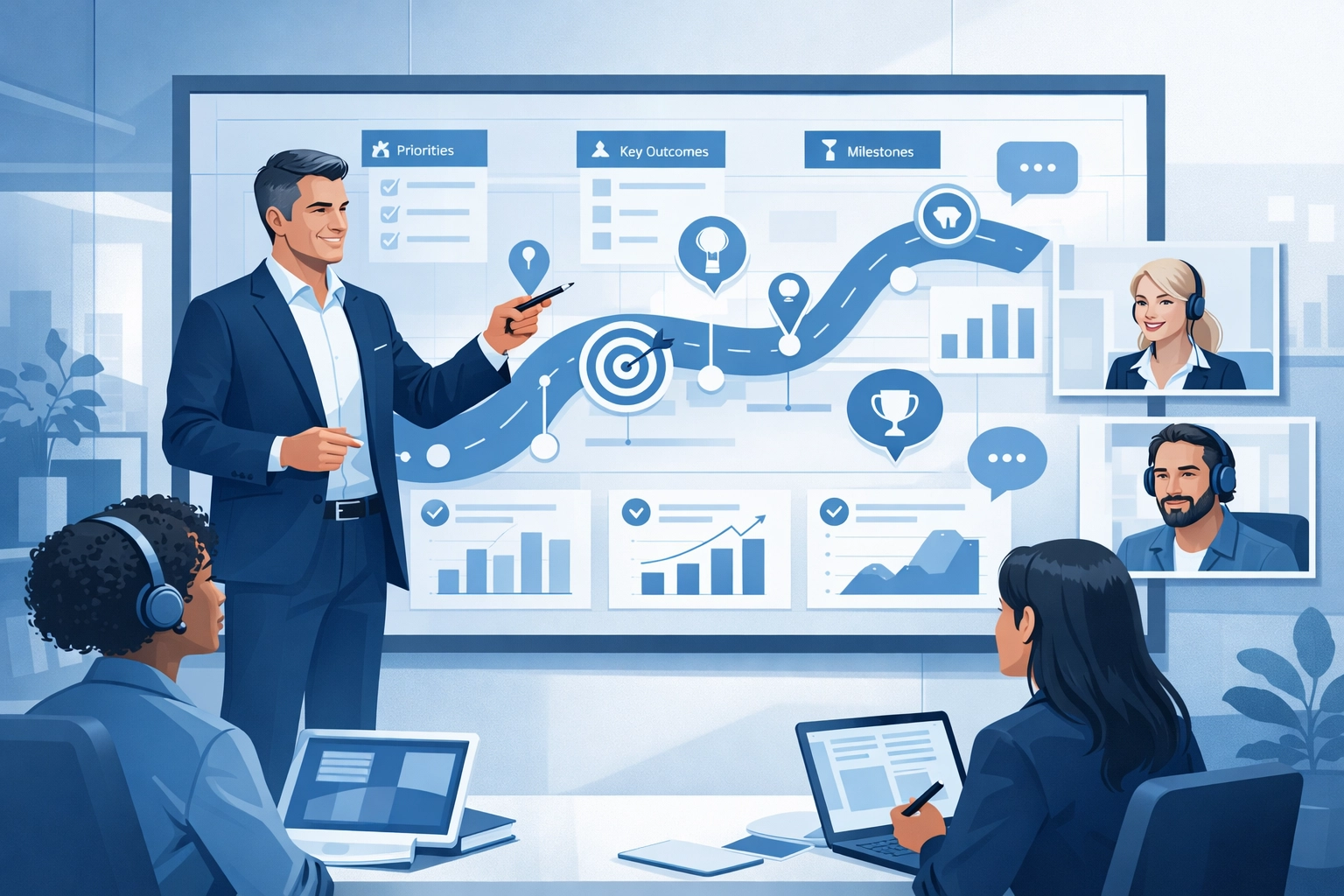
Ambiguity is the enemy of trust. Leaders must define success explicitly — what does a successful week look like? What are response time expectations for async communication? A single source of truth for priorities eliminates the guesswork that breeds micromanagement.
2. Radical Consistency
Trust is built through predictable behavior. If office-based employees receive more face-time and promotion opportunities than remote counterparts, trust will collapse. Leadership coaching helps managers identify and eliminate proximity bias, ensuring performance is evaluated on data, not physical presence.
3. Radical Connection
Affective trust requires intentional human connection. We implement "connection rhythms" — structured 1:1s focused on career development and personal alignment — rather than endless meetings that drain energy without building relationships.
Leveraging Agile for Distributed Alignment

In hybrid teams, Agile provides structure that builds trust through transparency:
Public Accountability: Team members identify 3-5 key outcomes weekly, creating shared visibility.
The Friday Demo: Replace status reports with sessions where teams celebrate completed work.
Continuous Retrospectives: Surface friction points before they become cultural rot.
Companies implementing these frameworks report 30% improvements in team productivity and significantly higher retention among remote employees.
Data-Driven Diagnostics: The I/O Psychology Advantage
Culture must be measured to be transformed. We analyze communication patterns, engagement scores, and project velocity to identify "trust silos" — areas where information isn't flowing or team members feel isolated. This allows for surgical interventions rather than broad, ineffective cultural initiatives.
Leadership Coaching: The Catalyst
The executive's role has shifted from "strategist in a corner office" to "facilitator of talent." Our coaching programs focus on three behaviors that high-trust leaders consistently demonstrate:
Vulnerability as Strength: Sharing the "why" behind difficult decisions fosters openness.
Asynchronous Mastery: Inspiring teams through written and video communication, reducing Zoom fatigue.
Empowerment over Direction: Shifting from telling to asking — guiding teams toward solutions rather than dictating them.
Trust Is Your Competitive Advantage
Organizations that master distributed collaboration access global talent, reduce overhead, and move faster. When teams trust their leadership, decisions are made with more confidence, risks are taken with more security, and innovation becomes a natural byproduct.
As one of our senior consultants puts it: "Culture is a product. Design it, test it, iterate on it — or your competitors will build a better one."
If your organization is sensing a growing gap between distributed teams, it may be time for a strategic reset.
Comments